
ferry, beach lane and Gabo SkyBridge to transform east coast access
A bold new concept plan proposes an electric ferry from Mallacoota Wharf across the lake to the coastal corridor, a managed beach access route for walkers, e-bikes, mobility scooters and light electric carts, plus eco-hubs, camping facilities and a final low-impact SkyBridge crossing to Gabo Island.
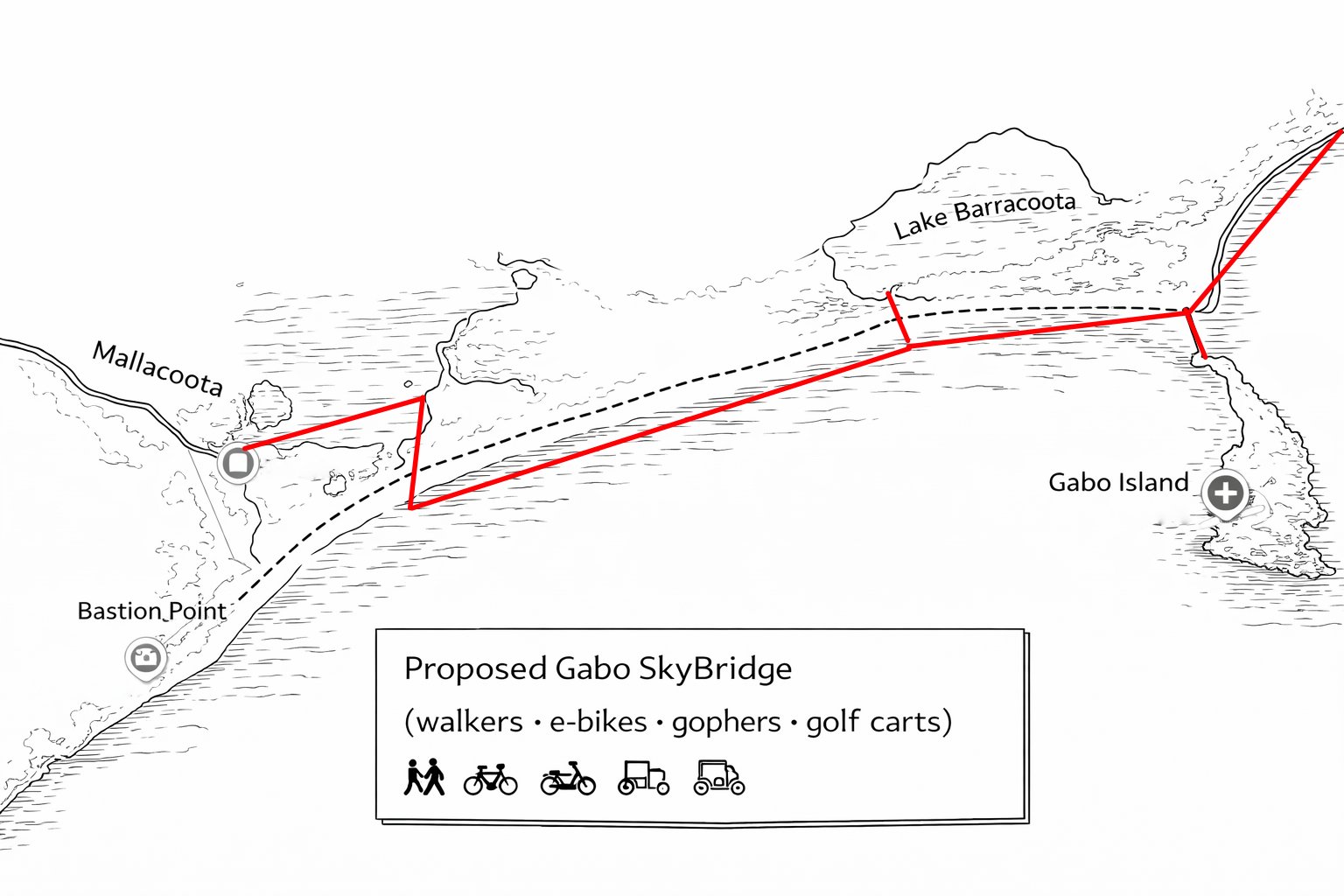
Concept route map showing the proposed ferry link, beach transit corridor, Barracoota spur, coastal extension and final Gabo Island crossing.
Mallacoota could soon become home to one of regional Australia’s most unusual low-impact transport links, with a new concept plan proposing a small solar-powered electric ferry from Mallacoota across the lake to the eastern coastal access corridor, followed by a managed beach route for walkers, e-bikes, mobility scooters and light golf-cart style electric vehicles. The plan would also include branch access toward Lake Barracoota and further up the coast, along with a final elevated SkyBridge crossing to Gabo Island.
The proposal is being promoted as a combined accessibility, tourism and environmental initiative, aimed at solving the long-standing problem of difficult eastern beach access while opening up more of the coastline to older residents, visitors, walkers and approved low-impact transport users.
A staged coastal access solution
The plan, being referred to as the Mallacoota Coastal Link, is built around several connected elements.
The first stage would establish a small solar-electric ferry service linking Mallacoota with the coastal corridor entry point. This would allow users to bypass the awkward western estuary and beach approach. The second stage would create a managed beach access corridor heading east for low-speed movement along the firm sand. The third stage would provide optional branch access to Lake Barracoota and further up the coast. The final stage would deliver the Gabo Island SkyBridge.
Supporters say the model has been designed to be practical, inclusive and environmentally light, while giving Mallacoota a distinctive new tourism drawcard.
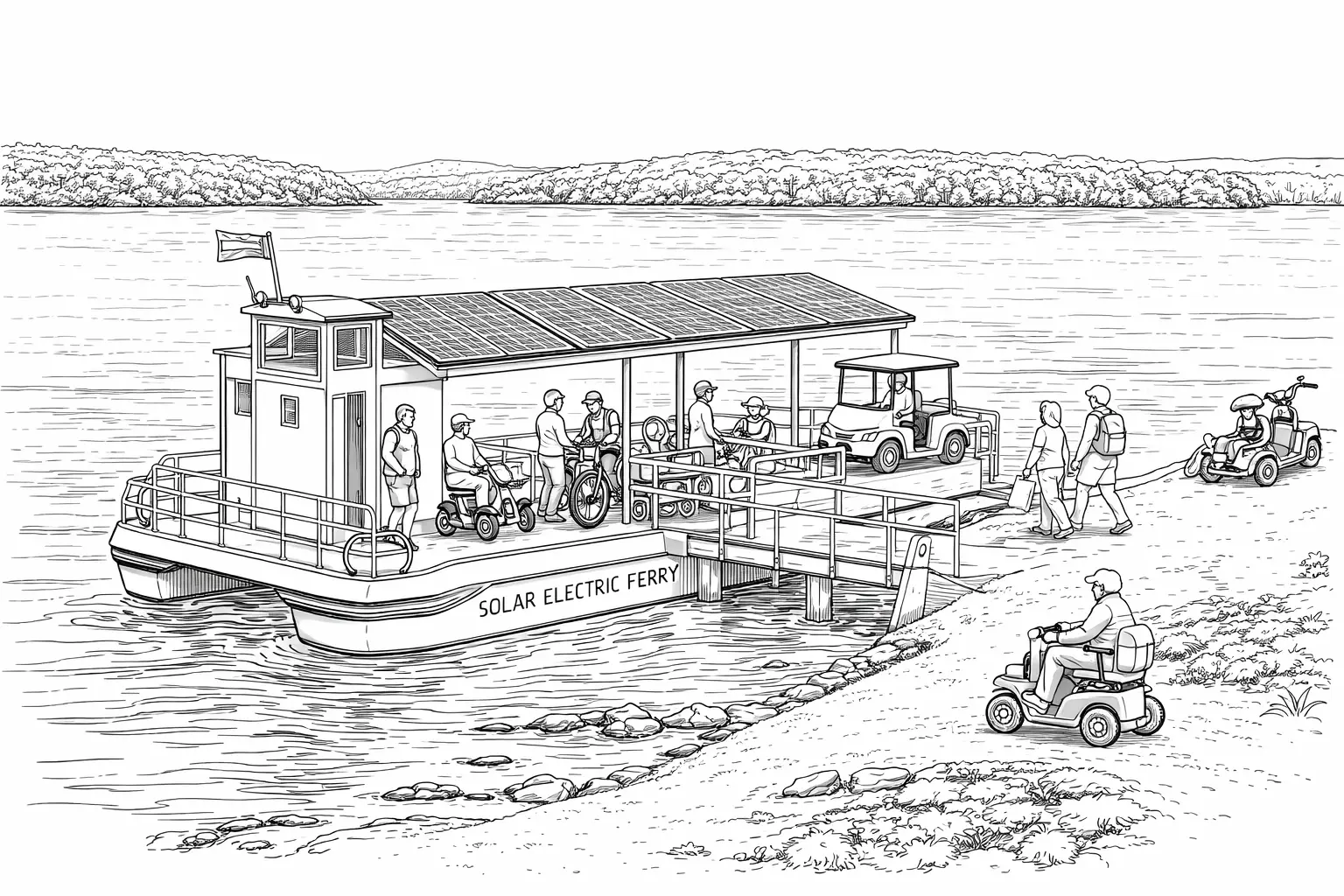
Solar ferry from Mallacoota
Under the concept, a quiet solar-electric ferry would run regular shuttle services from Mallacoota to the eastern shoreline entry point for the coastal route. The ferry is intended to carry walkers, e-bikes, mobility scooters, locally known as gophers, and light golf-cart style electric vehicles.
The ferry concept now being discussed is a low-wash, shallow-draft lake vessel with a roof covered in solar panels and battery-electric drive, supplemented by a small wind-assist rig for additional charging and symbolic appeal. The vessel would not be designed as a fast crossing craft. Instead, it would operate as a quiet, low-speed people-and-mobility link suited to the protected lake environment.
By shifting the starting point to a lake crossing, the plan avoids the most difficult access section near town while making the eastern coast more reachable for both locals and visitors.
A simple boarding ramp and low-profile landing platform are proposed, with summer timetables expected to align with day visitors, campers and guided tour departures.
Shared beach transit lane
From the eastern landing point, users would enter a marked low-speed beach transit lane running east along the coast. The route is intended to support walkers, beach campers, e-bike riders, mobility scooter users and light electric carts.
Motor bikes would be banned entirely. Internal combustion vehicles would not be permitted anywhere within the public corridor system.
Only electric or wind-powered transport would be allowed, with all approved wheeled vehicles required to use low-pressure sand tyres to reduce rutting and minimise damage to the beach surface. Shared-use speed limits would apply, and the route would remain subject to tide, weather and wildlife conditions.
Project material describes the corridor as a quiet coast-first transport zone, designed to avoid the noise, fumes and erosion associated with conventional beach traffic.
Accessibility for Mallacoota’s older community
A key argument in favour of the proposal is Mallacoota’s relatively large older population, many of whom already rely on mobility scooters for day-to-day movement around town.
Supporters say the Coastal Link would not just serve tourists, but also give older residents and less mobile locals a practical way to reach more remote parts of the coast without needing to walk long distances over soft sand.
Preliminary advice provided to the working group has indicated that larger low-pressure sand tyre upgrades for eligible mobility scooters may be supportable under some NDIS and Home Care Package arrangements, where improved access, mobility and social participation outcomes can be demonstrated.
This has already generated interest among local residents who see the plan as a genuine access measure as much as a visitor attraction.
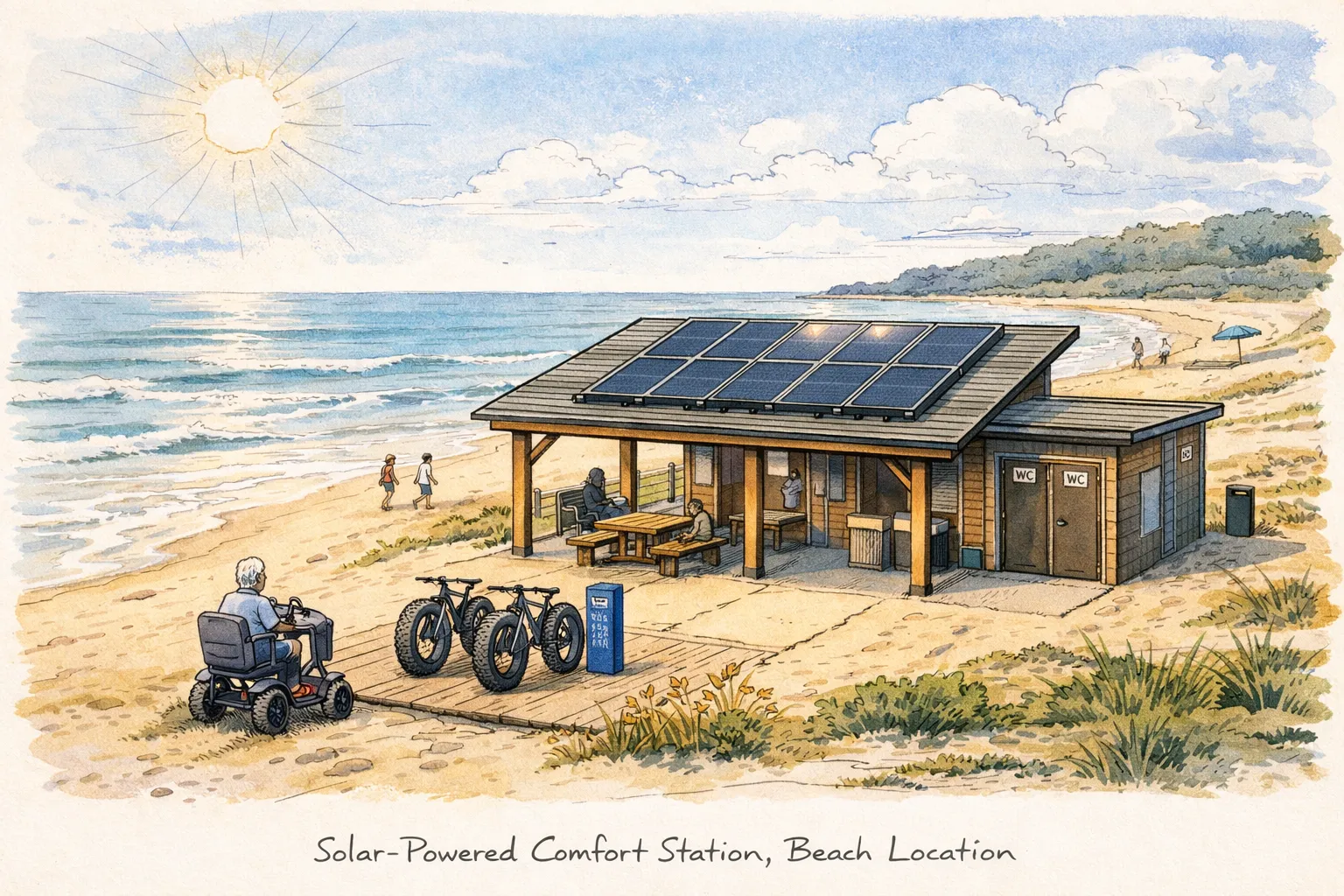
Access to Lake Barracoota and further up the coast
Once on the beach corridor, users would be able to branch north to Lake Barracoota or continue further up the coast via designated access points. These longer sections are being promoted as ideal for walkers, slow e-bike touring, supported mobility use and low-impact camping access.
The route is also expected to open up remote stretches of coastline that are currently difficult for many people to reach, particularly those who are older or less steady on uneven sand.
Rest points, shaded shelters and interpretation signage are all being discussed as possible features in later stages of the project.
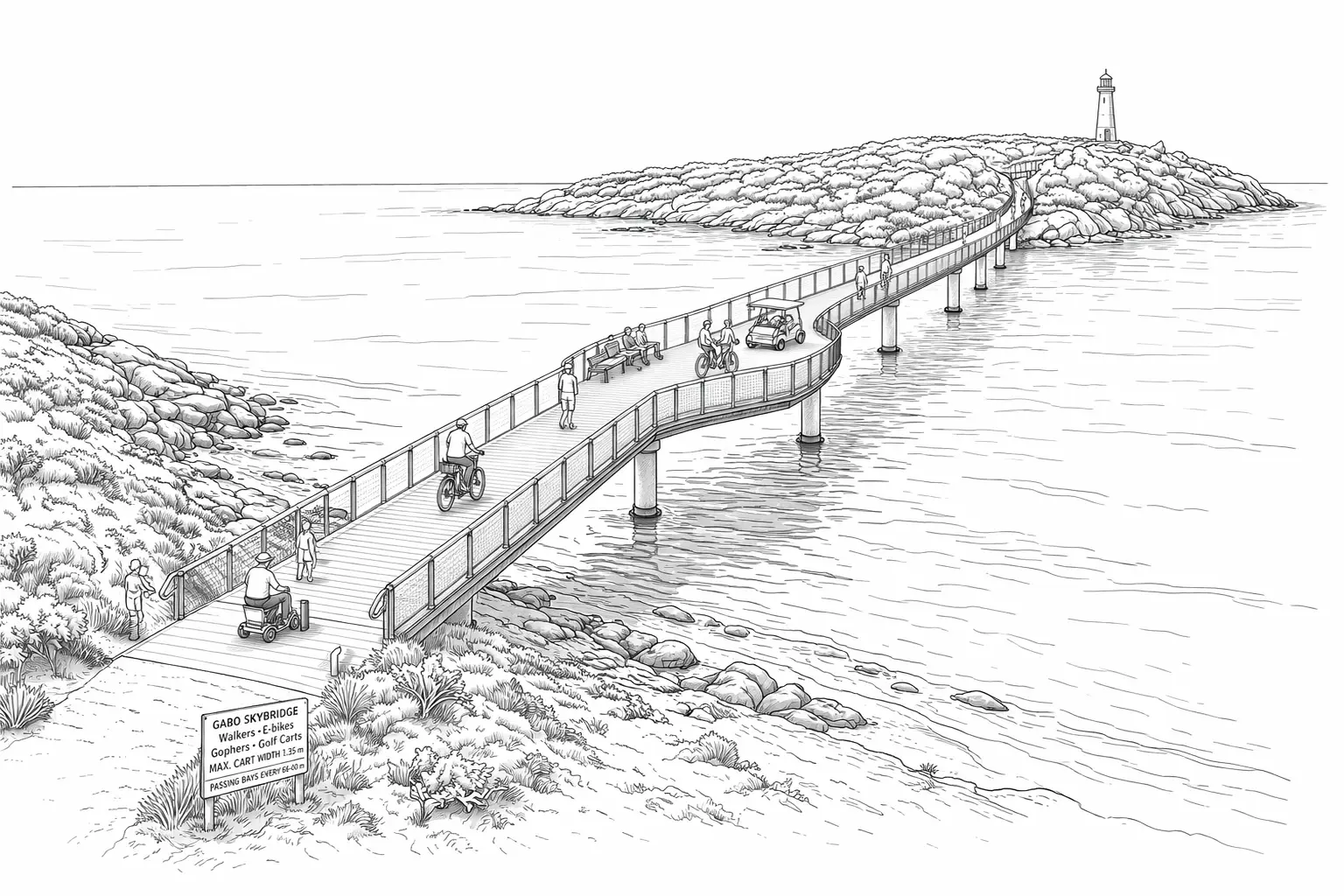
Gabo Island SkyBridge
The most ambitious element of the proposal is the final crossing to Gabo Island. Rather than a massive highway-scale structure, the concept now being modelled describes a lightweight, low-profile crossing from the coast to the nearest tip of the island, intended only for walkers, e-bikes, mobility scooters and small golf-cart style vehicles.
The current concept model suggests a bridge approximately 2.4 metres wide, operating as a single shared lane with a small number of passing bays at intervals. Vehicle width would be limited to about 1.35 metres, allowing safe use by compact electric carts while keeping the structure narrow and visually light.
The bridge would be designed as a modern aluminium coastal structure with long spans, a non-slip composite deck and a modest deck height sufficient for small boat passage. With water depths mostly under 2 metres, a maximum around 3 metres, and a largely rocky seabed, the foundations are considered one of the more practical parts of the concept.
Supporters say the structure could be built strong enough to withstand severe coastal storms while still presenting as a slender, elegant piece of low-impact infrastructure.
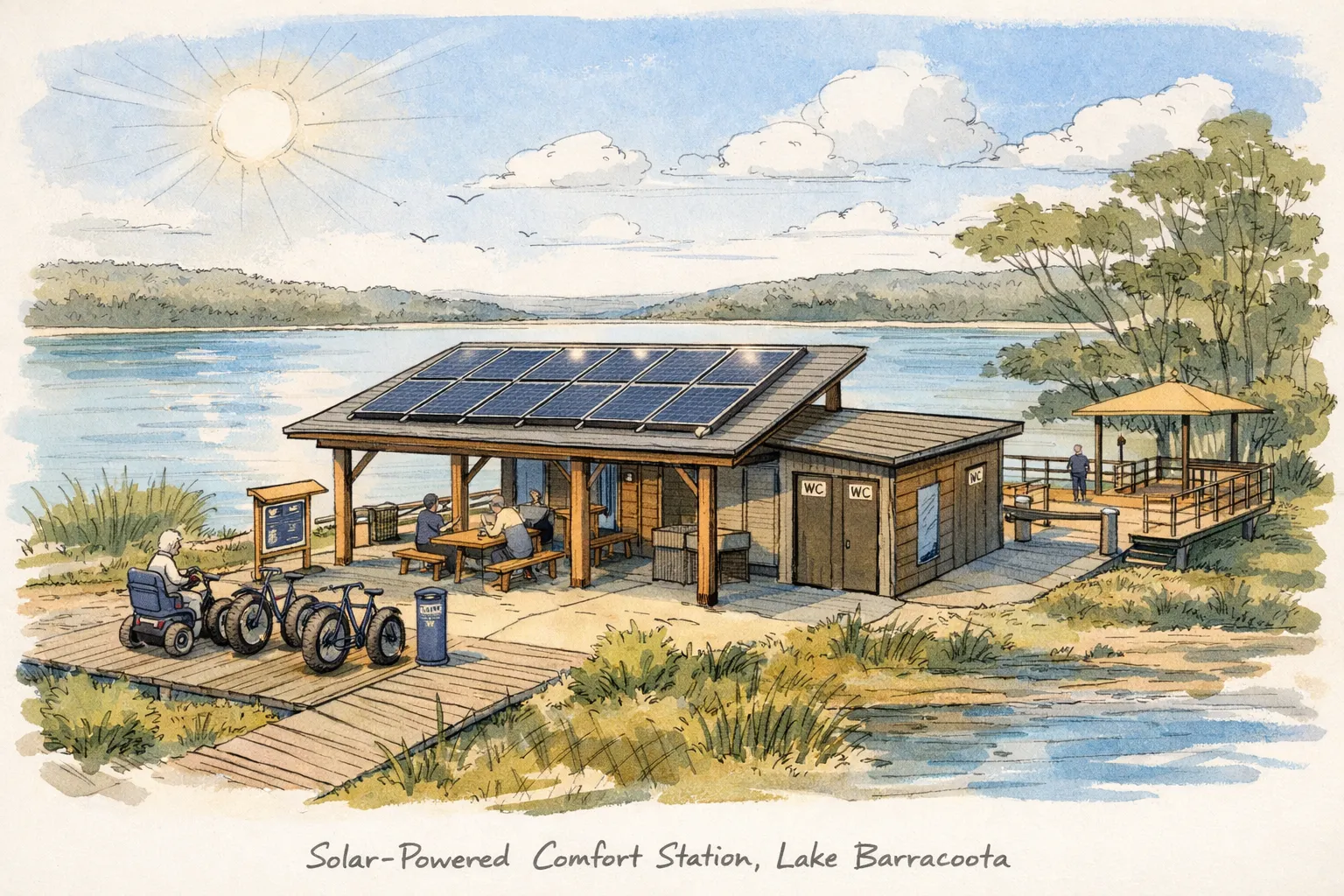
Refreshment stations, showers and eco-toilets
To support day users and overnight visitors, the proposal includes refreshment stations at key points along the route. These stations would include eco-toilets, solar-battery systems, potable water and free charging points for approved electric mobility devices.
Free showers are also proposed as part of the package, particularly for walkers, campers and mobility users travelling the longer sections of the corridor.
At this stage, the key refreshment hub locations being discussed are:
- Lake Barracoota access point
- a coastal midpoint further up the route
- the Gabo Island crossing point
The stations are being pitched as off-grid public amenity hubs, with all systems powered by solar, battery storage or small-scale wind support where suitable.
Cafes and glamping opportunities
Expressions of interest are expected to be sought for three licensed cafe sites linked to the project.
The proposed locations are:
- at the lake
- further up the coast
- at the Gabo crossing precinct
Each site would also have the option to include a boutique glamping component, allowing visitors to stay overnight in low-impact coastal accommodation without relying on conventional caravan or motor vehicle access.
Operators would be required to run entirely on renewable energy, with solar-battery systems and small-scale wind generation preferred. Petrol and diesel generators would not be permitted within the corridor precinct, and no fossil-fuel vehicle support would be allowed for normal operations.
The glamping concept is being framed as quiet, low-scale and landscape-sensitive, with a focus on walkers, older travellers and eco-tourism visitors looking for a more comfortable overnight option.
Beach camping and low-impact tourism
In addition to glamping, the proposal would welcome walkers and beach campers using designated low-impact sites along the route. The inclusion of eco-toilets, water points, showers and charging stations is intended to make longer stays more practical while reducing the pressure that unmanaged camping can place on dunes and shoreline areas.
Supporters say the broader aim is to create a new style of quiet coastal tourism, built around access, simplicity and minimal disturbance rather than large-scale development.
Camping nodes would be designed to work with the natural environment and remain small in footprint, while the route itself would encourage slower travel and longer stays.
Environmental safeguards
The proposal places strong emphasis on environmental controls. Motor bikes would be banned, public internal combustion traffic would be excluded, and all regular operations would be limited to electric or wind-powered systems.
Low-pressure tyres would be required on approved wheeled vehicles to reduce rutting and sand displacement. Dune protection, shorebird nesting controls, seasonal restrictions and tightly managed camping footprints are all expected to form part of the design.
Eco-toilet systems are intended to reduce waste pressure in sensitive coastal areas, while renewable power requirements would eliminate the noise and fumes associated with conventional generators and motor vehicles.
A practical note has also been included in the concept papers. Where heavy equipment is genuinely required, particularly during construction or major maintenance periods, a permit system would apply. This would allow approved machinery, including internal combustion equipment where necessary, to operate only under controlled conditions and for specific tasks.
Funding and operations
Backers of the proposal say the capital works would be supported through a mix of private philanthropy, renewable infrastructure grants and regional tourism development funding.
Initial capital support is understood to have come from a private benefactor with a long-standing interest in accessible coastal tourism and low-impact transport. The individual, who has asked not to be publicly identified at this stage, is believed to have taken a close interest in Mallacoota’s future as a model for quiet coastal mobility.
Ongoing operations are expected to be supported by a modest $15 per person access fee, with pensioners and students receiving a 25 per cent discount. Early planning documents suggest the fee would include ferry access, use of the beach corridor, refreshment stations and charging facilities, with separate arrangements to be developed for glamping stays and licensed hospitality operators.
Supporters say the pricing model has been deliberately kept simple so the project remains accessible while still meeting maintenance, staffing and environmental management costs.
Preliminary engineering view
Early concept modelling suggests the Gabo crossing would likely be one of the more achievable parts of the overall scheme. The current working idea is for a lightweight aluminium structure with a 2.4-metre deck, passing bays, corrosion-resistant detailing and modular construction methods suited to shallow coastal water.
With rocky foundations, modest tidal range and no requirement for large marine clearance, supporters say the bridge could potentially be delivered at the lower end of marine bridge costs, especially because it is not designed for cars or heavy trucks.
The working assumption is that the bridge would carry walkers, e-bikes, gophers and golf-cart style EVs only, keeping both construction cost and environmental impact well below that of a conventional transport bridge.
Local business and tourism potential
Backers of the Mallacoota Coastal Link say the project could create an entirely new type of visitor experience for the region, while also delivering more practical access for locals.
Licensed cafes, glamping sites, guided e-bike tours, accessible transport services and coastal day trips are all seen as possible economic spinoffs. The combination of ferry access, beach transit, renewable-energy hubs and the Gabo crossing is already being described by some supporters as a national model for low-impact coastal mobility.
The project is also expected to appeal strongly to travellers seeking quieter, car-free experiences and to older visitors who want easier access without high physical strain.
What locals are saying
Early reaction has reportedly been mixed but lively, although project supporters say the response so far has been remarkably positive.
One resident said the idea could finally make the eastern coastline reachable for people who have lived in Mallacoota for years but can no longer manage long beach walks.
Another welcomed the proposed ban on motor bikes, saying that if the coast is to be opened up further, it should be done quietly and without turning the beach into a racetrack.
There is also expected to be strong interest in the licensed cafe sites, particularly if they include showers, charging points and glamping options.
Remarkably, the proposal is said to be enjoying near-universal support at this early stage, with most discussion so far focusing on practical matters such as tyre standards, recharge queueing, shared-path etiquette, ferry loading arrangements and the spacing of passing bays on the Gabo crossing.
Expressions of interest to open soon
If the concept proceeds beyond the initial feasibility stage, formal expressions of interest would be invited for the three licensed refreshment and hospitality sites.
Prospective operators would need to show that they can work within strict environmental and access conditions, operate on renewable energy, support the low-impact ethos of the corridor and provide facilities suited to walkers, older visitors and electric mobility users.
Glamping-compatible operations are expected to be encouraged, particularly where they can demonstrate minimal site impact and a good fit with the project’s accessibility and tourism aims.
Trial details and next steps
The Coastal Link remains at concept stage, with a pilot summer season believed to be under consideration if community feedback is positive.
Further work would be needed on beach safety rules, vehicle eligibility, environmental management, amenity design, refreshment station servicing, ferry operations, bridge engineering and operator licensing. A permit or booking system may also be required for some sections, particularly during peak periods.
Supporters say the project offers a distinctly Mallacoota solution to a long-standing local access problem, combining practical transport, older community mobility, eco-tourism and a touch of regional ambition.
Readers concerned about beach congestion, scooter tyre eligibility, glamping tariffs, ferry timetables, SkyBridge tolls, billionaire influence or Gabo parking capacity are encouraged to check today’s date.

Wow As long as it saids” well thought out designed concept
Long overdue for visitors and Local
Lakes is beautiful so now our turn